Lion’s Mane Fruiting Body vs Mycelium: What’s the Difference?
- Dante Garth
- Jul 3
- 6 min read

Updated: Jul 7
When people start shopping for Lion’s Mane, they usually see a lot of terms thrown around:
Fruiting body. Mycelium. Extract. Powder. Dual extraction. Beta-glucans.
At first, it can feel confusing.
But one of the most important questions you can ask is simple:
What part of the mushroom am I actually getting?
At Mycorise, we use 100% fruiting body Lion’s Mane because we believe the actual mushroom matters.
This article breaks down the difference between fruiting body and mycelium, why the distinction matters, and why we choose to craft our tincture from the fruiting body.
__________________________________________________________________________________

__________________________________________________________________________________
What Is the Fruiting Body?
The fruiting body is the actual mushroom.
It is the part most people recognize when they think of Lion’s Mane: the white, shaggy mushroom with soft cascading spines.
In nature, the fruiting body is the reproductive structure of the fungus. It forms after the mycelium has grown, gathered energy, and reached the right conditions to produce a mushroom.
For Lion’s Mane, this is the beautiful white mushroom that grows from wood or a prepared substrate block.
This is the part Mycorise uses in our tincture.
Why?
Because the fruiting body is simple, recognizable, and directly tied to the mushroom people expect when they buy a Lion’s Mane product.
When we say 100% fruiting body, we mean the finished product is made from the actual mushroom, not grain-filled biomass.
__________________________________________________________________________________

__________________________________________________________________________________
What Is Mycelium?
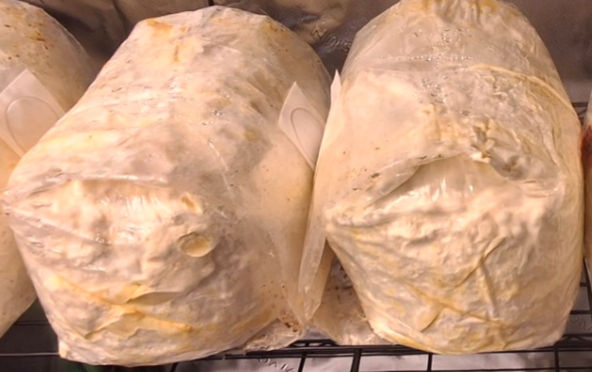
Mycelium is the root-like network of the fungus.
Before mushrooms appear, mycelium spreads through its food source. It grows through wood, substrate, or grain, breaking down nutrients and building the foundation needed for future mushroom growth.
Mycelium is not bad.
In fact, mycelium is essential.
Without mycelium, there would be no mushroom.
It is the living network that allows the organism to grow, expand, and eventually produce fruiting bodies.
But when it comes to supplements, the question is not whether mycelium matters.
It does.
The real question is:
What is actually inside the finished product?
Some mushroom products are made from mycelium grown on grain. In those cases, the final ingredient may include both fungal material and leftover grain substrate.
That is why customers should understand the difference between a product made from fruiting body and a product made from myceliated grain.
__________________________________________________________________________________
__________________________________________________________________________________
Why the Difference Matters
This matters because not all Lion’s Mane supplements are made the same way.
Some products are made from the fruiting body.
Some are made from mycelium.
Some are made from mycelium grown on grain.
Some are extracted.
Some are simply dried and powdered.
To the average customer, the label may just say Lion’s Mane.
But behind that label, the actual ingredient can be very different.
That difference matters because mushrooms contain naturally occurring compounds such as polysaccharides, beta-glucans, hericenones, phenolic compounds, and other bioactive compounds that researchers continue to study.
The part of the mushroom used, how it is grown, and how it is processed can all influence the final product.
At Mycorise, we believe customers deserve transparency.
You should know whether you are getting the actual mushroom, mycelium, grain-based biomass, or an extract.
That is why we keep our focus clear:
100% fruiting body Lion’s Mane.
__________________________________________________________________________________

__________________________________________________________________________________
Does That Mean Mycelium Is Bad?
No.
This is important.
Mycelium is not bad.
Mycelium is part of the mushroom life cycle, and researchers have studied compounds found in different parts of Lion’s Mane, including both fruiting bodies and mycelium.
The issue is not whether mycelium has value.
The issue is clarity.
If a product is made from mycelium, customers should know that.
If a product is made from fruiting body, customers should know that too.
If a product includes grain from the growing process, that should be clear.
At Mycorise, we are not here to confuse people with marketing terms.
We want people to understand what they are buying.
And for our product, we choose to focus on the fruiting body because we believe the actual mushroom is the cleanest, most straightforward foundation for our tincture.
Why Mycorise Uses 100% Fruiting Body Lion’s Mane
At Mycorise, every bottle begins with cultivation.
We do not just buy mystery powder and put it into a bottle.
We grow Lion’s Mane, observe it, harvest it, dry it, and extract it with intention.
Using fruiting body Lion’s Mane aligns with our values:
Transparency — You know what part of the mushroom is being used.
Quality — We focus on the actual mushroom, not grain-based filler.
Craftsmanship — We grow and prepare the mushroom with care from start to finish.
Integrity — We believe a product should be easy to understand and honestly represented.
When you see 100% fruiting body on a Mycorise bottle, it means something.
It means the product was made with the part of Lion’s Mane people recognize as the mushroom itself.
__________________________________________________________________________________

__________________________________________________________________________________
Why Extraction Still Matters
Using the fruiting body is only one part of the process.
Extraction matters too.
Mushrooms have tough cell walls, and many of their compounds are not easily accessed by simply eating or powdering them.
That is why Mycorise uses a dual-extraction process.
Water extraction helps capture water-soluble compounds such as polysaccharides and beta-glucans.
Alcohol extraction helps capture alcohol-soluble compounds found within the mushroom.
Together, dual extraction is designed to create a more complete extract than water or alcohol alone.
This process takes time.
But that is the point.
If we spend weeks growing the mushroom, we believe the extraction process should respect that work too.
No shortcuts.
No rushing.
Just patience from culture to bottle.
__________________________________________________________________________________

__________________________________________________________________________________
What Customers Should Look For
When choosing a Lion’s Mane product, here are a few questions worth asking:
Does the brand say whether it uses fruiting body or mycelium?
Does it explain how the mushroom is extracted?
Does it clearly state what is inside the product?
Does the company educate customers instead of relying only on hype?
Does the brand avoid making unrealistic medical claims?
These questions matter.
Because when a supplement label is vague, customers are left guessing.
At Mycorise, we want to remove the guesswork.
We use 100% fruiting body Lion’s Mane.
We dual extract it.
We craft it in small batches.
And we educate honestly about what Lion’s Mane is — and what it is not.
__________________________________________________________________________________
What Lion’s Mane Is Not
Lion’s Mane is not a miracle cure.
It is not a prescription medication.
It is not intended to diagnose, treat, cure, or prevent any disease.
It should not replace sleep, nutrition, exercise, medical care, or professional guidance.
But Lion’s Mane is a fascinating mushroom with a growing body of research behind it.
It contains naturally occurring compounds that scientists continue to study for their relationship to cognitive wellness, nerve-related pathways, antioxidant activity, gut health, and overall wellness support.
That is enough reason to take it seriously.
Not with hype.
With respect.
__________________________________________________________________________________
Final Thought
The difference between fruiting body and mycelium may sound small at first.
But once you understand it, it becomes one of the most important things to look for when choosing a Lion’s Mane product.
The fruiting body is the actual mushroom.
Mycelium is the living network that helps create the mushroom.
Both matter in the life cycle.
But at Mycorise, we choose to craft our tincture from 100% fruiting body Lion’s Mane because we believe the actual mushroom should be the foundation of the finished product.
You deserve to know what you are taking.
You deserve transparency.
And you deserve a product made with purpose from start to finish.
🍄 100% Fruiting Body Lion’s Mane
🧪 Dual Extracted
🌿 Small-Batch Crafted in Wisconsin
Grown with purpose. Extracted with integrity.
__________________________________________________________________________________
Ready to experience Mycorise?
Explore our small-batch Lion’s Mane tincture ↓
Disclaimer: These statements have not been evaluated by the Food and Drug Administration. This product is not intended to diagnose, treat, cure, or prevent any disease.


Comments